
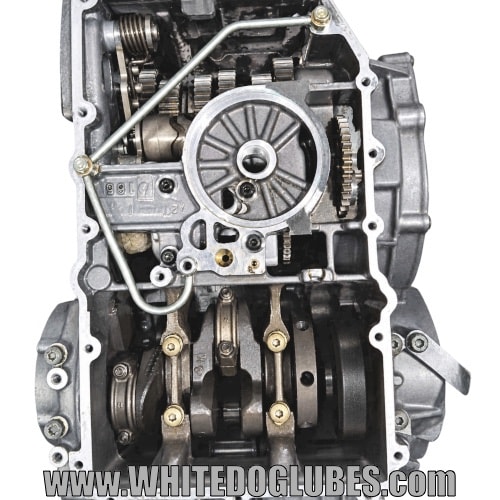
Rubber engine oil seals perform two crucial roles inside an engine. Firstly they stop oil (or coolant) from escaping. Secondly, they isolate pre filtered (dirty) oil from the clean oil that feeds your engine’s bearings.
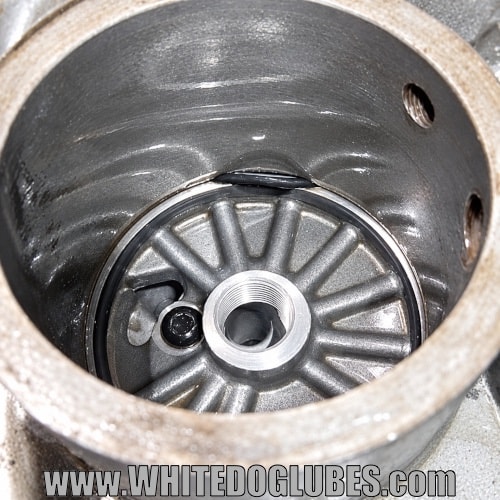
Triumph Trophy 900 oil filter housing showing the incorrectly seated O ring seal
This Triumph Trophy 900 engine was from a motorcycle we dismantled for spares.
It had been rebuilt by the owner, but while we were removing parts from it we discovered a problem with one of the rubber O ring seals.
The seal between the top of the oil filter housing (where the oil sump connects to the bottom of the engine) hadn’t been seated in it’s groove correctly.
Note – Elastomeric oil seals are normally manufactured from synthetic Nitrile rubber (known as NBR) and are engineered to remain flexible while withstanding engine heat and constant oil submersion.
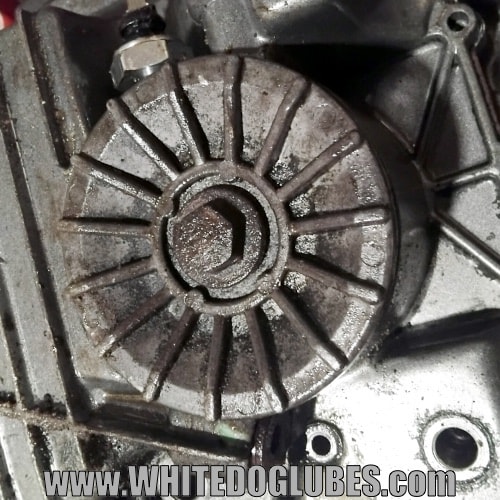
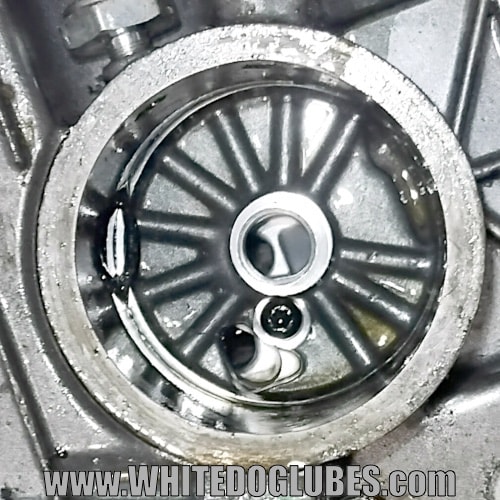
The oil filter housing (shown from the bottom of the engine) and the rubber seal shown protruding into the oil filter cavity
Note – What makes this an issue is basic fluid dynamics (physics), liquid under pressure will always take the path of least resistance.
Think of a sink with an overflow pipe, if water encounters resistance at the main drain (like a blockage or the plug left in), it immediately rushes down the open overflow instead.
The issue with the rubber O ring not being seated properly is that the seal is on the unfiltered side of the oil filter, which means unfiltered (dirty) oil will bypass going through the oil filter and go straight into the area the crankshaft is housed in.
A small (ish) gap in the seal like this will likely mean a large portion of the engine oil will bypass the filter, straight into the crankcase housing. Oil, like any liquid, will take the path of least resistance so instead of being forced through microscopic pores of the oil filter (which filter out alot of the debris) it will go through the gap created by the oil seal no being seated properly.
In the Triumph T300 engines, there is a secondary (paper) gasket around the outside perimeter of the rubber O ring, but, paper gaskets rely on even and uniform pressure to work properly, as the rubber gasket was showing inside the filter cavity (and there is a visible gap where the metal edges join together) the paper gasket would erode very quickly and/or develop a hole the oil can pass through
Note – Oil Erosion and Delamination (also known as wicking). The internal paper gasket that surrounds the rubber O ring recess theoretically provides a secondary boundary between the dirty oil and the internal clean oil.
However, a paper gasket relies entirely on uniform (even) metal to metal clamping force to seal high pressure. When the rubber O ring popped out of its channel and got pinched, it prevented the sump and crankcase faces from pulling down flush around the gallery.
Under pressure (from the oil pump), raw oil would easily blow past or erode the unclamped paper edge, creating an immediate short cut straight to the crankshaft.
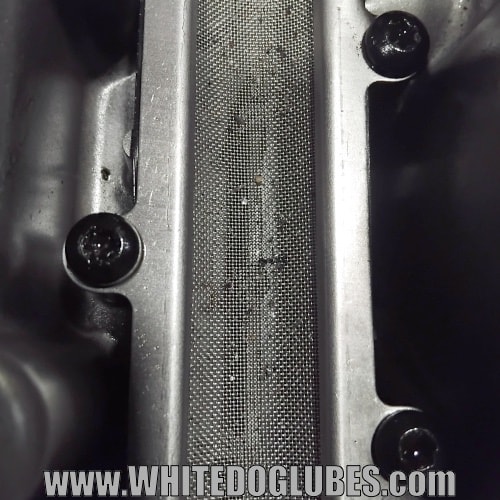
Engine debris in the gauze located in the oil sump from oil that bypassed the oil filter
As a large portion of the engine oil would likely be made up of unfiltered (dirty) engine oil this means any debris, clutch particles or metal debris from combustion would end up in the sections of the engine that should be supplied with clean oil.
Issues caused by the faulty seal could be:
- Unfiltered debris reaching main bearings – Metal shavings, clutch plate dust and carbon particles bypassing the filter completely and flowing directly into the crankshaft main journals and big end bearings.
- Accelerated bearing and crank scoring – Abrasive contaminants trapped between the soft bearing material and the hardened steel crankshaft journals would gouge and score both surfaces leading to premature bearing failure.
Camshaft and valve train wear – Contaminated oil pumped straight into the cylinder head could score the aluminum camshaft journals and bucket lifters premature wear. - Loss of oil pressure – Because an open gap offers almost zero resistance compared to a paper filter, oil pressure drops especially at warm idle when the oil thins out.
- Contamination after rebuilds – Any leftover metal or gasket debris from previous engine work is continuously recirculated through the engine rather than trapped in the filter.
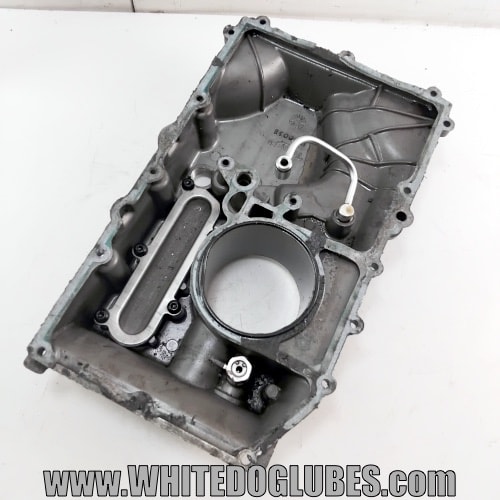
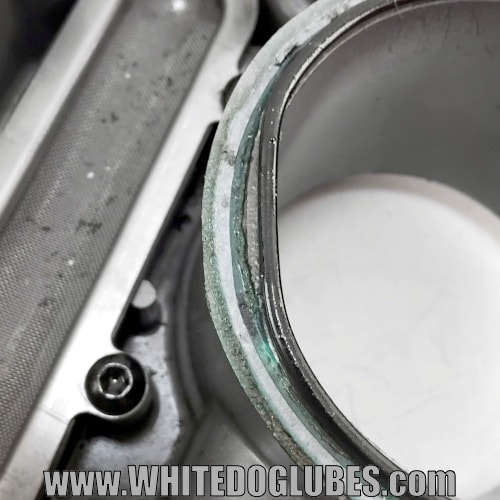
Pictures showing the rubber oil seal out of position
Engine rebuilds rarely fail because of major mechanical problems, they fail because of the smallest, hidden details.
A rubber O ring not seated properly in its groove almost completely bypasses a brand new paper filter, feeding raw, contaminated oil straight to your crankshaft while everything looks pristine on the outside.
If working on or rebuilding and engine, Never rush the final assembly! Always use a dab of suitable grease to retain recessed seals, take a second to look down filter housings or any visible areas before torquing casings and double check mating faces.
Catching a pinched seal on the workbench takes two seconds, fixing a scored crankshaft takes weeks and hundreds of pounds.
If you’ve got any questions, comments or suggestions please feel free to leave them below 🙂
Keep up to date by joining us on our social media pages:


Disclaimers:
The information provided on this page is ‘to the best of our knowledge’ and should not be taken as 100% accurate!!
To keep this page as a free resource for people to use, there are affiliate links (mainly Amazon) throughout the article. These affiliate links help maintain the cost of running this blog (basically, if you visit Amazon through one of the links and buy something, we make a few pence!).
Leave a Reply