
The motorcycle drive chain is one of the most important (and often overlooked) parts of a motorbike, but why is it important to keep it lubed and properly adjusted?
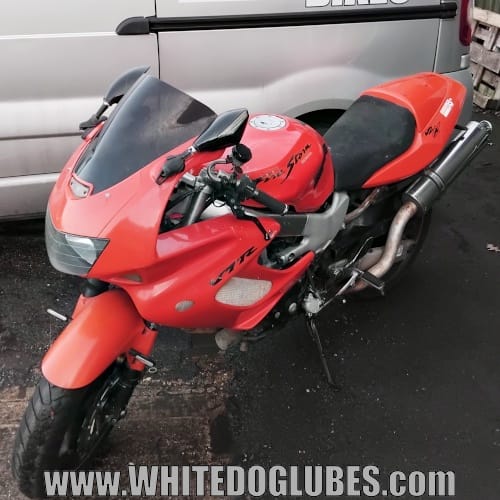
VTR1000 F crankcase damage after chain snapping
A Honda VTR1000 Firestorm that has been damaged while being ridden. Luckily the rider was unharmed.
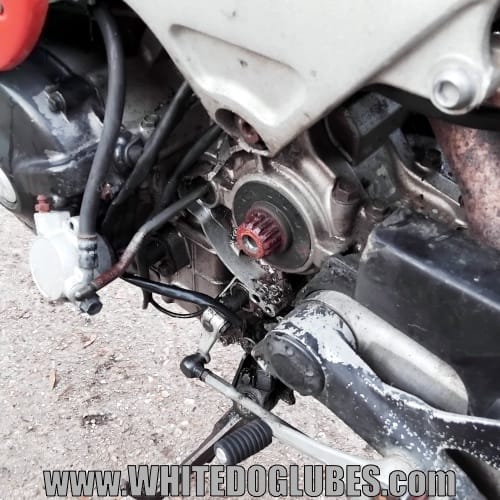
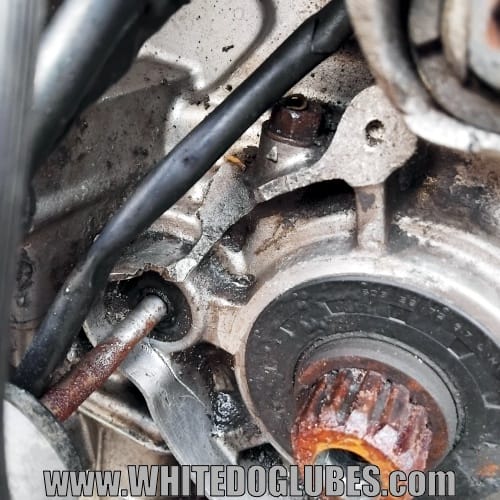
Although the bike looked easily repairable after a quick inspection, a closer look showed quite extensive damage to the clutch, sprocket cover (which was totally destroyed), crankcase and frame.
The drive chain is what connects the engine to the rear wheel, it transfers energy from the engine to make the bike move.
When you twist the throttle, the chain pulls the rear sprocket, turning the wheel and moving you forward.
Like any moving part on a bike, the chain needs oiling (lubing) regularly to help coat and protect the internal surfaces of the chain as they rub together when being used
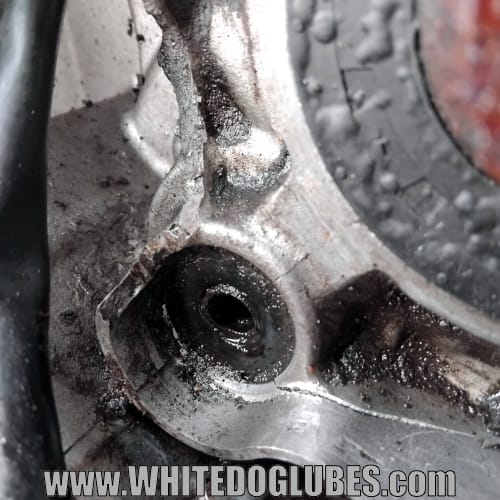
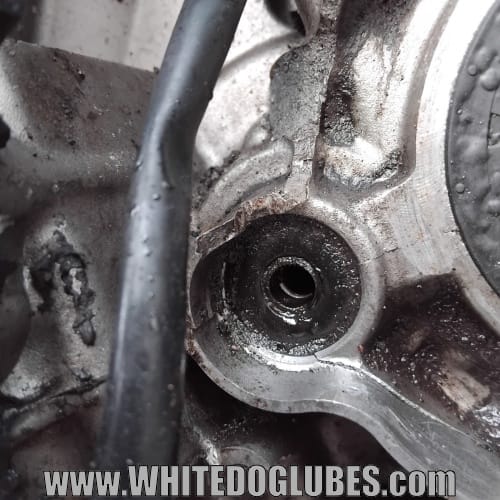
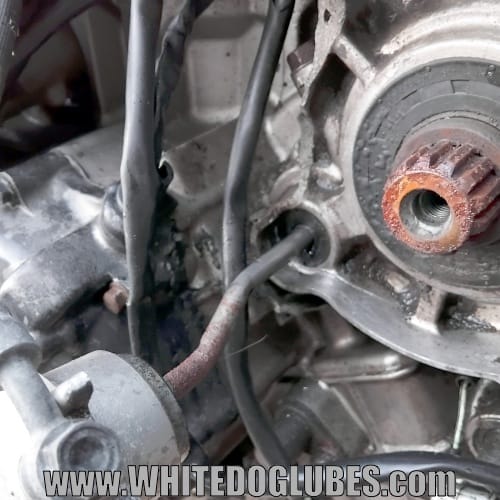
Damage to the hydraulic clutch and crankcase caused by a chain snapping
When a drive chain snaps at high speed, it acts like a high-tension steel whip. Since it’s rotating rapidly, that kinetic (movement) energy has to go somewhere, usually resulting in a cluster of mechanical and physical damage.
- The Engine and Crankcase
This is often the most expensive damage. The chain usually bunches up at the front sprocket. Because there is no room, it punches through the engine casing or the sprocket cover.
In many cases, this cracks the main crankcase, which can effectively total the engine by causing massive oil loss. - The Frame and Swingarm
As the chain flails, it strikes the swingarm often gouging deep chunks out of the aluminum or steel.
If the chain loops upward, it can dent or crack the subframe, the main frame rails or engine mounting points, compromising the bike’s structural integrity. - Rear Wheel Lock-up
If the chain gets tangled in the rear sprocket or wedged between the wheel and the swingarm, it can instantly lock the rear wheel or split the tyre.
At higher speeds, this often leads to a high-side crash, which is significantly more dangerous for the rider than a standard slide. - Impact on the Rider
The chain is positioned right next to your left leg. If it snaps and whips upward, it can strike the calf or ankle with enough force to shatter bone or cause severe lacerations even through thick riding boots and leathers.
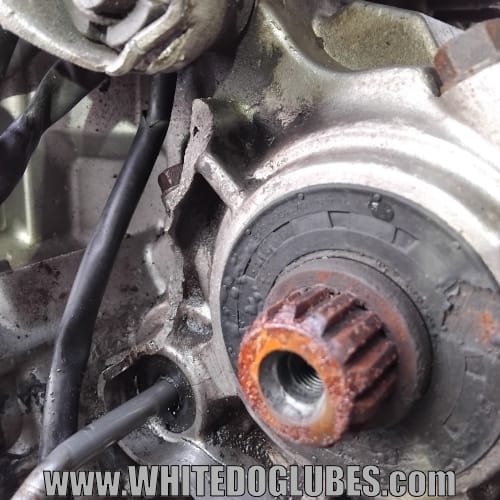
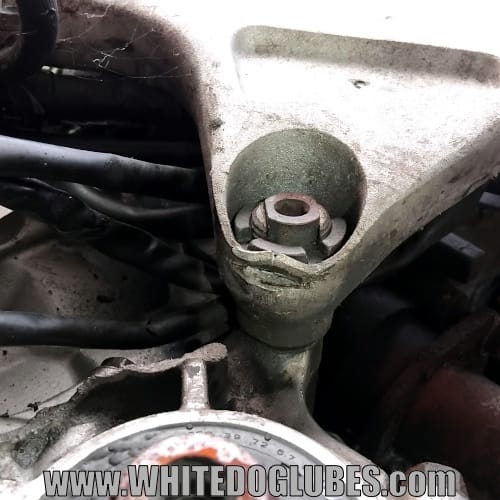
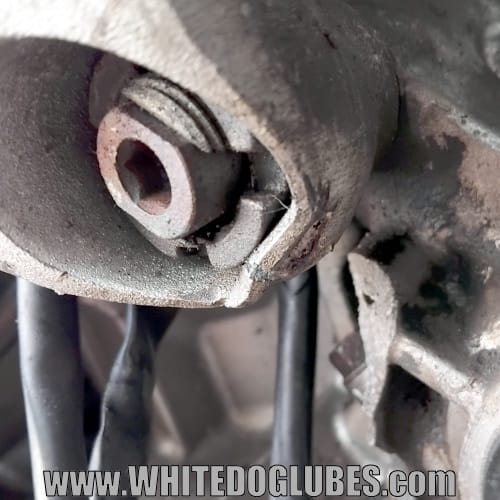
Damage caused by a flailing chain to the frame/engine mounting point and crankcase
There are 3 ways to help greatly reduce the chances of the chain snapping:
- Cleaning the chain – Old, built up chain lube can attract dirt and grit, which sticks to the chain, working inside the moving parts and causing faster wear to the chain
- Lubing the chain – As a general rule, you should give the chain a quick lube daily (or every time you ride the bike). Failing that it should be lubed every week at the minimum.
How much should I use? The secret to using chain lube is LITTLE AND OFTEN. It is much better to give the chain a quick spray daily then soak it once a month - Adjust the chain when needed On most bikes, the chain should be checked at least once a month. With the bike on level ground and no weight (rider, luggage etc) on it, push the bottom/middle of the chain. It should move about an inch (2.5cm), any more or less and the chain will need adjusting.
Note – A chain can be too tight as well as too loose. Too loose can cause chain slap (where the loose chain hits other motorcycle parts) or it could jump the sprocket teeth. Excess movement of the chain also greatly increases wear in the chain and sprockets.
Too tight can cause the chain to damage the sprockets and, in extreme cases, cause the front sprocket spindle to bend, damaging the engine.
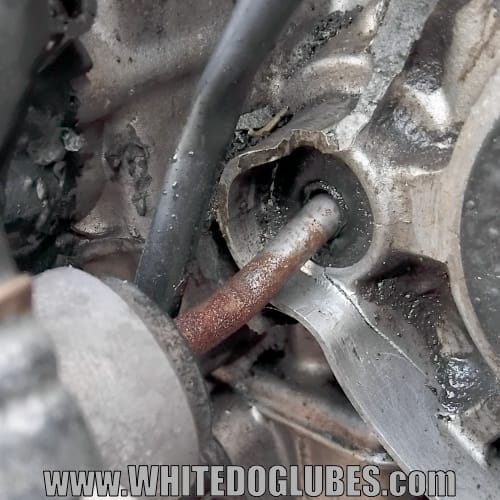
Damage to the hydraulic clutch bar.
A quick check of the chain once a week can help to spot signs that a chain is failing:
- Kinked Links – If the chain has ‘frozen’ links that stay in a V-shape even on the straight run, the internal lubrication has failed. These are the primary snapping points on a chain.
- The Hooked Sprocket – If the sprocket teeth look like shark fins or are pointed rather than flat-topped, they will ‘grab’ the chain instead of letting it roll off, significantly increasing the risk of a chain snap.
- Side-to-Side Play – A chain that can be wiggled significantly sideways is worn internally and is prone to jumping off the sprocket, which often causes the chain to snap when it jams.
Can I use WD40 or engine oil to lube the chain? Short answer, NO. Oils like WD40 often contain gritty particles which helps remove rust on things like nuts and bolts, but the grit will cause excessive wear in a drive chain.
Chain lube is quite thin initially, this allows it to soak into the chain parts then it thickens which helps it to stick to the chain and stops it flying off when the bike is moving. Engine oil (and other oils) do not do this and tend to fly off as soon as the bike is ridden.
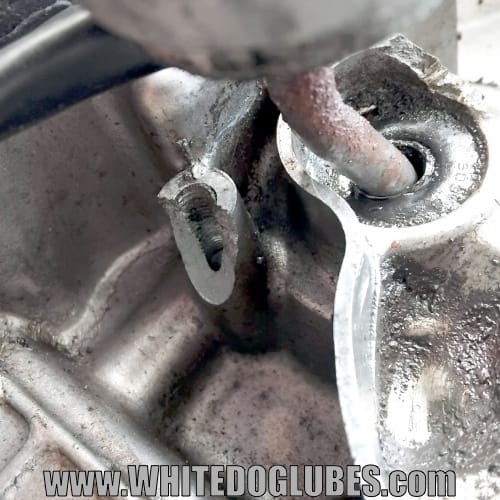
The clutch bar was severely bent when the chain hit it and the slave cylinder was damaged. It’s currently unknown if this damaged the clutch in the engine.
Why using a good chain lube actually matters…
Good lubrication keeps the O-rings (the tiny rubber seals between the plates) moist. Once those dry out and crack, dirt gets inside the pin, creates heat through friction and literally grinds the metal until it becomes thin enough to shear.
A word of caution – Eventually, a chain will wear so much that you will not be able to adjust it any more. Some people remove a few links from the chain so they can adjust it to save money.
It is NOT A GOOD IDEA to do this as once a chain is this worn it desperately needs replacing and the chances of the chain snapping GREATLY increases.
Disclaimers:
The information provided on this page is ‘to the best of our knowledge’ and should not be taken as 100% accurate!!
To keep this page as a free resource for people to use, there are affiliate links (mainly Amazon) throughout the article. These affiliate links help maintain the cost of running this blog (basically, if you visit Amazon through one of the links and buy something, we make a few pence!).
Leave a Reply